You may not have heard about it yet, but National Treasury recently published a discussion paper proposing significant changes to how South Africa handles billions of rands in unclaimed retirement benefits. The numbers are striking — an estimated R51 billion in retirement savings is sitting unclaimed across the country's pension and provident funds, affecting over 4.3 million members. That's money that belongs to real people. In many cases, the retirement funds simply cannot find them.
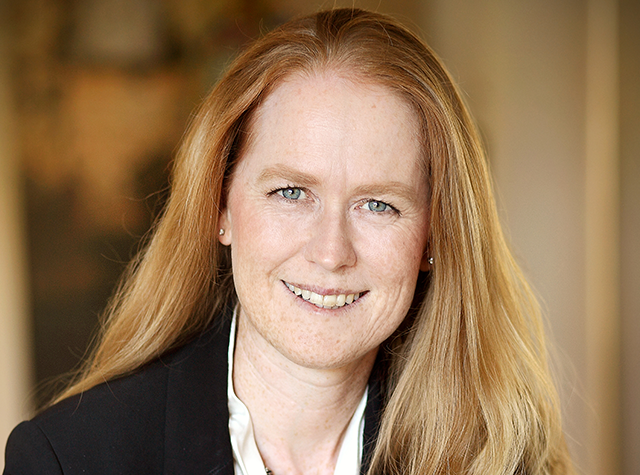
Pictured: Niki Giles, Head of Strategy at Prescient Fund Services


Why does money go unclaimed?
The most common reason is straightforward: people change jobs, move house, or change their phone numbers and forget to tell their retirement fund. When a fund can't reach you, it can't pay you. Over time, if you can't be found, your savings get classified as an unclaimed benefit. The money doesn't disappear, but it stops working as hard for you as it should, and eventually the system could lose track of your savings entirely.
This problem is especially common among people who leave an employer but don't formally update their arrangements with the fund. It's easy to assume that once you've left your job, the fund will sort it all out.
Unfortunately, that's not how it works. In some instances, employees are not even aware that money is being deducted monthly and paid over to a retirement fund. It’s important to check what salary deductions are being made, if those deductions are paid over to a retirement fund, and what the details of the fund is in case you need to contact them directly.
What is Treasury proposing to do about it?
Treasury's proposal involves creating a central administrator, essentially a national database, to consolidate all unclaimed benefit records and make it easier for members and beneficiaries to track down money owed to them. In principle, this is a good idea, and one the industry broadly supports.
The more controversial part of the proposal is that assets would be transferred out of retirement funds entirely and invested through the Corporation for Public Deposits (CPD), a South African Reserve Bank entity that manages government money in very conservative, short-term instruments. Essentially in cash and Treasury bills.
For dormant bank accounts or unclaimed insurance payouts, that may make sense. But for retirement savings, which are meant to grow over decades, moving them into a cash-plus vehicle could significantly reduce what a member ultimately receives. A balanced investment portfolio, held over 20 or 30 years, is likely to outperform a cash deposit by a meaningful margin. That difference directly affects the value of your benefit when you finally claim it.
The industry is currently engaging with Treasury on these concerns. It's an important conversation, and the outcome will affect millions of South Africans.
What can you do right now?
The best way to protect your retirement savings is simple: make sure your fund can find you. Here's what that means in practice:
If you're changing jobs, contact your retirement fund administrator before you leave or as soon as possible afterwards. You have options. You don't have to withdraw your savings or transfer them immediately. You can ask to remain in the fund as a paid-up member, which means your existing savings stay invested and continue to grow, even though you're no longer contributing. The critical step is to make sure the fund has your updated contact details: your new address, phone number, and email address.
If you've recently changed jobs and haven't done this, it's not too late. Contact your fund administrator now and confirm that your details are current.
If you're not sure which fund you belong to, check your old payslips or contact your previous employer's HR department. You can also search the FSCA's unclaimed benefits portal at www.fsca.co.za to see whether any benefits are registered in your name.
Keep your nominated beneficiaries up to date. This is separate from your own contact details. This provides guidance to the fund on who you would like to receive your savings if you pass away. Life changes: marriages, divorces, children born, family members who have passed. Review your nominations regularly.
The bottom line
The proposed changes are a reminder that your retirement savings don't look after themselves and that the system depends on you staying connected to it. R51 billion in unclaimed benefits is not an abstract statistic. It represents real people, many of whom simply moved on with their lives and didn't realise their savings were waiting for them.
Don't let your savings become part of that number. Keep your details current, know where your money is, and if you're ever unsure, reach out to us. That's what we're here for.
If you need to update your details or have questions about your membership status, please contact the Prescient Fund Administration team on retirement@prescient.co.za.
Disclaimer:
The Prescient Retirement Funds (“the Funds”) are registered with the Financial Sector Conduct Authority and approved by the South African Revenue Services for tax purposes. The Funds are administered by Prescient Fund Administration (Pty) Ltd (Reg. No: 2023/697717/07, “Prescient Fund Administration”). Prescient Fund Administration is an approved retirement benefits administrator (Licence No: 24/810) under section 13B of Pension Funds Act, 24 of 1956 and a Juristic Representative of Prescient Fund Services (Pty) Ltd, an authorised Financial Services Provider (Licence No: 43191) under the Financial Advisory and Intermediary Services Act, 37 of 2002. This document was written by the Prescient Retirement Funds for information purposes only and does not constitute advice or a solicitation for investments. Members may need to seek professional financial advice before making an investment decision. It is subject to copyright and may not be altered, copied or reproduced in whole or in part without the written permission of Prescient Retirement Funds. The Funds and their trustees, and / or Prescient Fund Administration cannot be held liable for damages or loss suffered as a result of any action taken based on the information in this document.
Whilst we have taken reasonable steps to provide accurate and up to date information in this publication, we do not give any warranties or representations, whether express or implied, in this respect. The information is subject to change without notice. The information contained in this publication is provided for general information purposes only and none of the information constitutes an offer or solicitation for business, a recommendation with respect to our services, a recommendation to engage in any transaction or legal, tax, financial, investment or accounting advice. No action should be taken on the basis of this information without first seeking independent professional advice. We shall not be liable for any loss or damage whatsoever arising as a result of your use of or reliance on the information contained herein.